


Celery Seeds: New Studies 03/2026
Updated: Aug 15

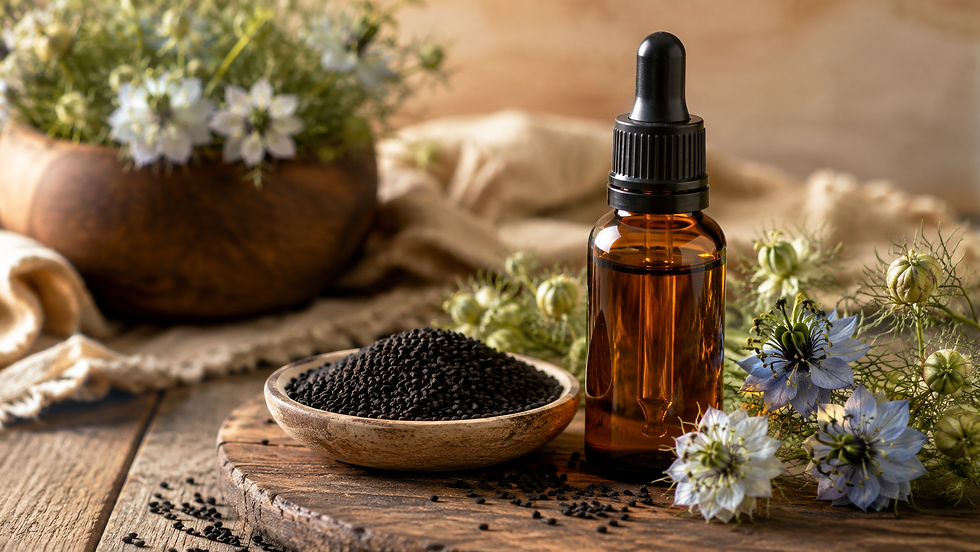
Image: AI
In human studies, celery is usually not examined as a “vegetable serving”, but as a clearly dosed preparation made from celery seeds, which is what the described effects refer to.
There is a simple reason for this: the amount and composition remain constant, making it easier to assign changes in measured values.
Effects were found especially on blood pressure and metabolic blood markers, as well as — in one combination product — on symptoms of knee osteoarthritis.
Blood pressure:
Lower values after celery seed intake. In a placebo-controlled clinical study with adults with metabolic syndrome, celery seed was used daily for several weeks in a standardized dose. At the end, blood pressure values in the celery group were lower than at the beginning.
Both values were affected: systolic blood pressure, the upper value, and diastolic blood pressure, the lower value.
Vascular tension is also often mentioned as a plausible connection: when blood vessels can relax more easily and widen, resistance in the vascular system decreases, and blood pressure values may turn out more favorably. A possible involvement of fluid regulation is also mentioned in some cases, because this can also influence pressure conditions.
Blood lipids:
In the same study, blood lipid values were also measured. In particular, a reduction in triglycerides and VLDL was reported. Both values belong to the area of “fat transport” in the blood and are often considered together when looking at changes in lipid metabolism. In the results of this study, these were exactly the fat markers in which a clear favorable signal appeared in the celery group.
Blood sugar:
In addition to blood pressure and blood lipids, glucose values were also recorded. These also changed favorably in the celery group. At the same time, insulin and markers related to insulin action were also recorded; no clear difference was reported for these.
Uric acid:
Another laboratory value that was lower after intake in the celery group was uric acid. In practice, this value is often considered in connection with metabolic topics and was recorded in this study as part of the laboratory values.
Knee osteoarthritis:
In a randomized, placebo-controlled clinical study on knee osteoarthritis, no pure celery product was tested, but a combination preparation made from Boswellia serrata, meaning frankincense, and celery seed extract. Pain, stiffness and physical function were recorded.
Result: In the treatment group, pain decreased, stiffness was reduced and everyday physical function improved.
In addition, values were examined that the authors discussed in connection with inflammation and cartilage metabolism. Favorable changes were also found here, in addition to the improvements mentioned above.
Sources:
03.03.2026
Author: Alireza Mohtashami
Related reading
About the AuthorAlireza Mohtashami is the author of "Plant-Eater's Helper", a certified mushroom expert of the German Mycological Society and a trained practitioner of herbal medicine. He continuously reviews current studies on nutrition, nature and holistic health and presents them in a practical way, free of ideology. More about the author
The Book on This Topic"Plant-Eater's Helper" is the guide to plant-based nutrition: critical nutrients and antinutrients, protein requirements and plant-based sources, and bioavailability through sprouting, soaking, cooking and fermenting. Plus practical chapters on sport, pregnancy and highly processed foods. Currently available in German only; an English edition is in preparation. All about the bookReading sample (PDF) · Autorenwelt · Amazon · Romeon Verlag · Thalia


Comments