


Ashwagandha Root Extract – Latest Studies 05.2026
Updated: Aug 15
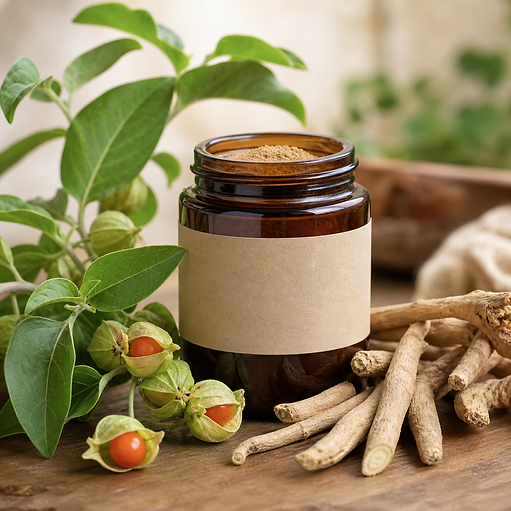
Ashwagandha, botanically known as Withania somnifera, is a plant whose root has long been used in Ayurvedic tradition. Modern supplements usually use standardized root extracts. Important compounds in ashwagandha include withanolides. Ashwagandha is often discussed in relation to stress, sleep, calmness, resilience and hormone-related topics. The word adaptogen means that a plant is traditionally used to help the body deal with stress. In research, the exact extract, dose and target group matter a lot. New data show:
Menopausal symptoms: A 56-day randomized, double-blind, placebo-controlled study with 60 women aged 45–55 years with diagnosed menopause investigated 300 mg ashwagandha root extract twice daily. At the end of eight weeks, the total Menopause Rating Scale score decreased highly significantly in the ashwagandha group compared with placebo. Psychological, somatic, and urogenital symptoms improved significantly. At the same time, serum estradiol and progesterone levels increased, quality-of-life scores improved, and FSH, LH, hot flash frequency, and perceived stress scores decreased.
Conclusion: Ashwagandha root extract shows strong potential in this current study for improving menopausal symptoms, hormonal parameters, perceived stress, and quality of life. The results make ashwagandha one of the more interesting plant extracts in current human research on stress, hormonal transition phases, and women’s health.
Source: https://www.frontiersin.org/journals/reproductive-health/articles/10.3389/frph.2025.1647721/full
05.05.2026
Author: Alireza Mohtashami
Related reading
About the AuthorAlireza Mohtashami is the author of "Plant-Eater's Helper", a certified mushroom expert of the German Mycological Society and a trained practitioner of herbal medicine. He continuously reviews current studies on nutrition, nature and holistic health and presents them in a practical way, free of ideology. More about the author
The Book on This Topic"Plant-Eater's Helper" is the guide to plant-based nutrition: critical nutrients and antinutrients, protein requirements and plant-based sources, and bioavailability through sprouting, soaking, cooking and fermenting. Plus practical chapters on sport, pregnancy and highly processed foods. Currently available in German only; an English edition is in preparation. All about the bookReading sample (PDF) · Autorenwelt · Amazon · Romeon Verlag · Thalia


Comments