


Beetroot Juice – Latest Studies 05.2026
Updated: Aug 15
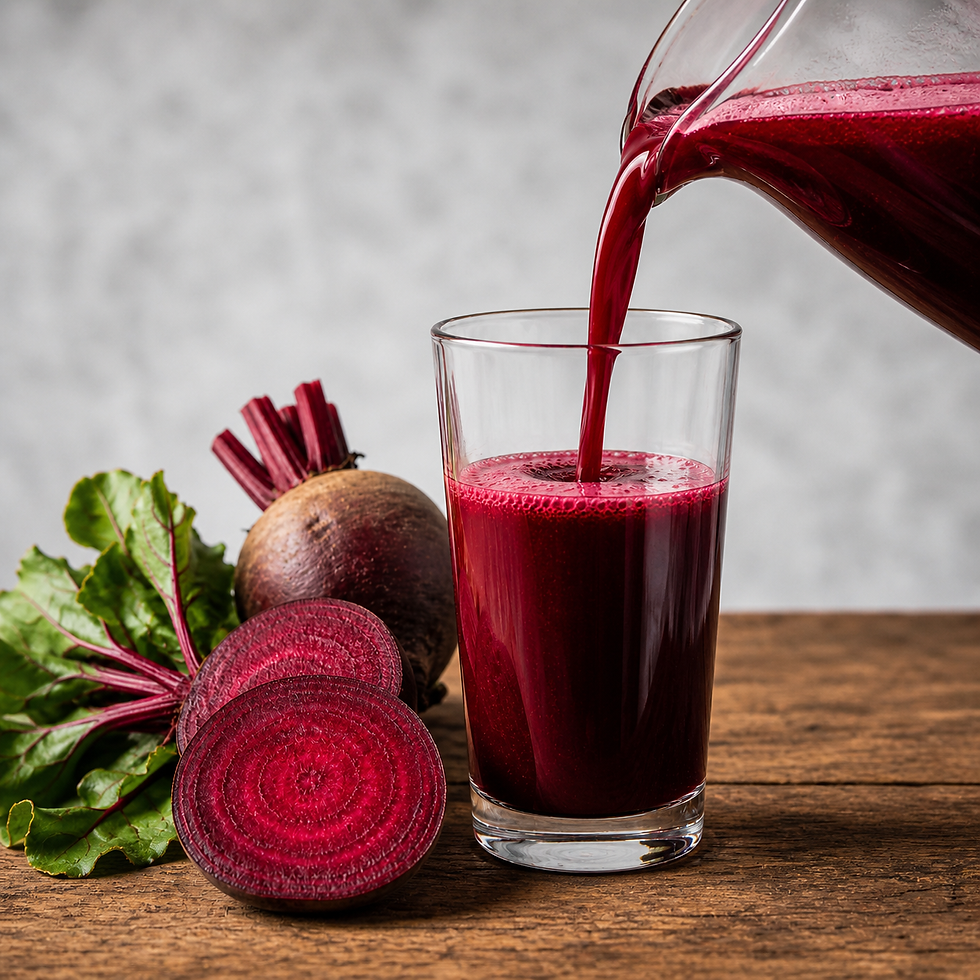
Beetroot juice is mainly studied in nutrition research because of its nitrate content. Nitrate can be converted in the body into nitric oxide. Nitric oxide is a signaling molecule that influences blood vessels and blood flow. This is why beetroot juice is often studied in sports and performance research. Studies often look at endurance, oxygen use, muscle work and recovery.
In these studies, the focus is usually on a specific juice amount at a specific time, not just on beetroot as a general food. New data show:
Performance and recovery in football: A placebo-controlled, double-blind crossover study in 16 trained football players, published in early 2026, examined the acute intake of beetroot juice. The athletes completed two 30-second Wingate tests. Compared with placebo, beetroot juice significantly increased peak and mean power output and shortened the time to peak power. During exercise, no difference in muscle oxygenation was observed, but after exercise, muscle desaturation decreased, suggesting improved recovery.
Conclusion: The latest study suggests that acute beetroot juice intake before intense exercise can increase peak performance and improve post-exercise muscle oxygen availability. This makes beetroot juice especially interesting for short, intense efforts such as sprints, intervals, and explosive sports performance.
03.05.2026
Author: Alireza Mohtashami
Related reading
About the AuthorAlireza Mohtashami is the author of "Plant-Eater's Helper", a certified mushroom expert of the German Mycological Society and a trained practitioner of herbal medicine. He continuously reviews current studies on nutrition, nature and holistic health and presents them in a practical way, free of ideology. More about the author
The Book on This Topic"Plant-Eater's Helper" is the guide to plant-based nutrition: critical nutrients and antinutrients, protein requirements and plant-based sources, and bioavailability through sprouting, soaking, cooking and fermenting. Plus practical chapters on sport, pregnancy and highly processed foods. Currently available in German only; an English edition is in preparation. All about the bookReading sample (PDF) · Autorenwelt · Amazon · Romeon Verlag · Thalia

Comments